Pendant Lighting for Kitchen Island: Spacing, Height, Glare, and Task-Light Decisions
Updated:
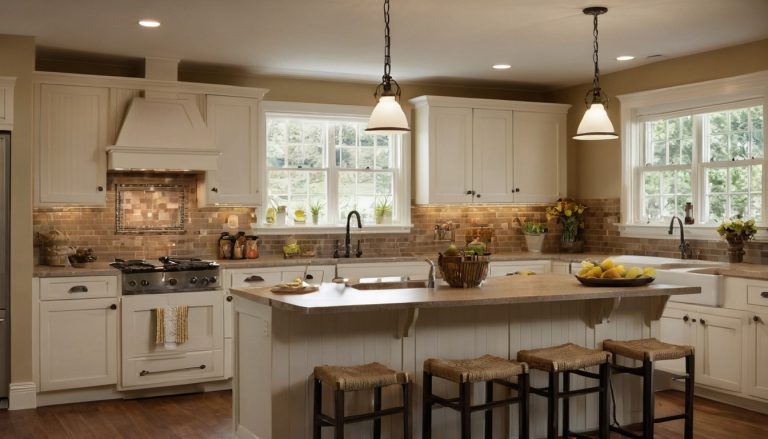
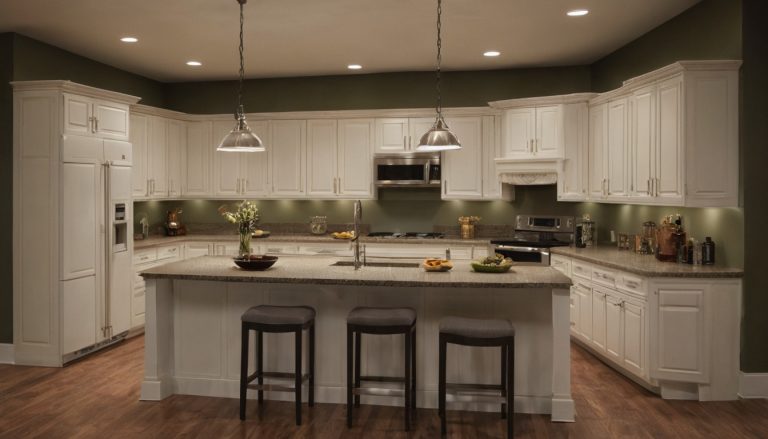
A 96-inch island can make three pendants look perfect online and wrong once ceiling boxes are roughed in. Pendant lighting for kitchen island planning should start with the finished island, ceiling, sightlines, and work surface, not the shade shape.

Pendant Lighting for Kitchen Island: Spacing, Height, Glare, and Task-Light Decisions shown as a car-free Al Marjan Island travel planning reference.
Pendant lighting for a kitchen island should be planned from island dimensions, not fixture style first
Pendant lighting works best when island length, depth, ceiling height, seating position, and work tasks are measured before fixtures are selected. Style matters, but dimensions decide whether pendants provide task light, visual rhythm, or an obstruction.
Measure the island, ceiling, and sightlines before choosing kitchen island hanging lights
- Measure finished island length from end panel to end panel.
- Measure finished island depth, including seating overhang and working side.
- Confirm counter height. Standard island counters are commonly about 36 inches high, while raised bar counters are commonly about 42 inches high.
- Confirm finished ceiling height after flooring, ceiling finish, beams, and soffits.
- Check sightlines from the sink run, dining table, walkway, and seated island positions.
Decide whether the kitchen island pendant lamps are decorative, task-focused, or both
A storage-only island may need scale and atmosphere. A prep island with chopping, homework, serving, cleanup, or a sink needs controlled light on the counter.
DarkSky International lighting principles recommend lighting that is useful, targeted, low level, controlled, and warm colored. If qualified LED lamps or fixtures suit the project, ENERGY STAR states that they use at least 75 percent less energy and last up to 25 times longer than incandescent lighting.
How many pendant lights should go over a kitchen island?
The number of pendant lights over a kitchen island depends on island length, pendant diameter, shade opacity, beam spread, and visual rhythm. Two or three pendants suit many residential islands, but one linear fixture or several small pendants can work better when box locations or shade size limit spacing.

How many pendant lights should go over a kitchen island shown with hotel-arrival and visitor-movement context.
Use island length, pendant diameter, and end clearance to calculate pendant spacing
A 6 ft island often takes two modest pendants or one linear fixture. A 7 ft or 8 ft island usually accepts two larger pendants or three smaller ones. A 9 ft or 10 ft island can carry three pendants, several narrow pendants, or a long linear fixture.
Many layouts keep pendant centers roughly 12 to 18 inches in from the island ends, with about 24 to 36 inches between centers depending on shade diameter. A 16-inch shade needs more air than a 9-inch glass cylinder.
Choose two pendants, three pendants, or one linear fixture based on proportion and electrical practicality
Two pendants give medium islands a calmer composition and fewer electrical points. Three pendants can balance a long island, but the layout fails if shades are too wide or ceiling boxes land off rhythm. A linear fixture can solve limited junction-box conditions if its length does not overpower the counter.
If box relocation requires ceiling patching, paint, adhesive, or finish work indoors, the U.S. Environmental Protection Agency recommends increasing ventilation while using products that emit volatile organic compounds, as noted in its indoor air quality guidance.
What height should pendant lights be over a kitchen island?
Pendant lights over a kitchen island should hang low enough to light the counter but high enough to protect sightlines and head clearance. For many standard kitchens, a practical starting range is 30 to 36 inches from the finished countertop to the bottom of the shade.
Set pendant height from the finished countertop, not from the unfinished floor
The finished counter is the reference plane because pendant lighting serves the work surface, not the subfloor. For an 8 ft ceiling, many pendant light fixtures for kitchen island layouts stay near the middle of the 30 to 36 inch range. A 9 ft ceiling may tolerate a slightly higher shade if output is sufficient. A 10 ft or vaulted ceiling usually needs longer rods, longer cords, or a fixture designed for that drop.
Before installation, confirm minimum and maximum suspension lengths, canopy depth, rod increments, cord adjustability, and sloped ceiling adapter limits.
Raise or resize kitchen island hanging lights when they block views across an open-plan kitchen
A deep opaque shade can sit in the eye-line band from the dining table, sofa, or sink. If conversation, television viewing, or an exterior window matters, raise the pendant, choose a shallower shade, reduce the diameter, or use clearer diffusion.
Pendant lighting for a kitchen island must control glare as well as brightness
Pendant lighting for kitchen island projects fails when a fixture reads bright on a specification sheet but feels harsh at dinner or weak during prep. Glare control depends on shade depth, diffuser quality, bulb position, beam angle, dimming, counter reflectance, and whether other kitchen lighting shares the task load.
Opaque, clear, and diffused pendant shades create different glare risks over island counters
Clear glass exposes the lamp and can sparkle aggressively on polished quartz, stainless steel, or sealed stone. A shallow metal shade may hide the bulb from standing eye level but still throw a hot circle on the counter. A diffused globe softens the lamp image, although poor diffusion can reduce useful task light.
Countertop finish matters because reflected glare comes back toward the eye. The Natural Stone Institute recommends neutral cleaners, stone soap, or mild liquid dishwashing detergent with warm water for natural stone, and warns that abrasive scouring powders or creams can scratch those surfaces.
Lumens, beam angle, CCT, CRI, and dimming compatibility should be checked before buying pendant fixtures for a kitchen island
Fixture finish is not a lighting specification. Ask for the specification sheet and check lumen output, beam angle or distribution, CCT, CRI or color quality, and driver, lamp, and dimmer compatibility.
Kitchen pendant lighting is rarely the only task lighting a working island needs
Kitchen pendant lighting casts shadows when a cook stands between the lamp and the chopping area. Recessed downlights, discreet linear ceiling lighting, or nearby undercabinet lighting can carry work light while pendants handle scale and focus. Electrical coordination still has to follow the local inspection path; in IRC-based jurisdictions, IRC Chapter 39 covers residential power and lighting distribution.
Should pendant lights be centered to the kitchen island or to work zones?
Pendant lights are usually centered visually on the finished kitchen island, but the final layout must also respect sinks, cooktops, seating, hood locations, cabinet doors, and circulation. The best rough-in positions are confirmed only after the island plan, appliance locations, and pendant dimensions are approved.
Center kitchen island pendant lamps on the finished island footprint, not temporary cabinet boxes
The finished island footprint includes side panels, waterfall ends, decorative legs, trim, and countertop overhangs. A pendant centered on bare cabinets can look off once a thick stone overhang or seating side is installed.
Work zones can justify small adjustments. A sink island may need pendants flanking the sink rather than hanging over the faucet. A cooktop island must be coordinated with the hood, heat clearances, and appliance instructions.
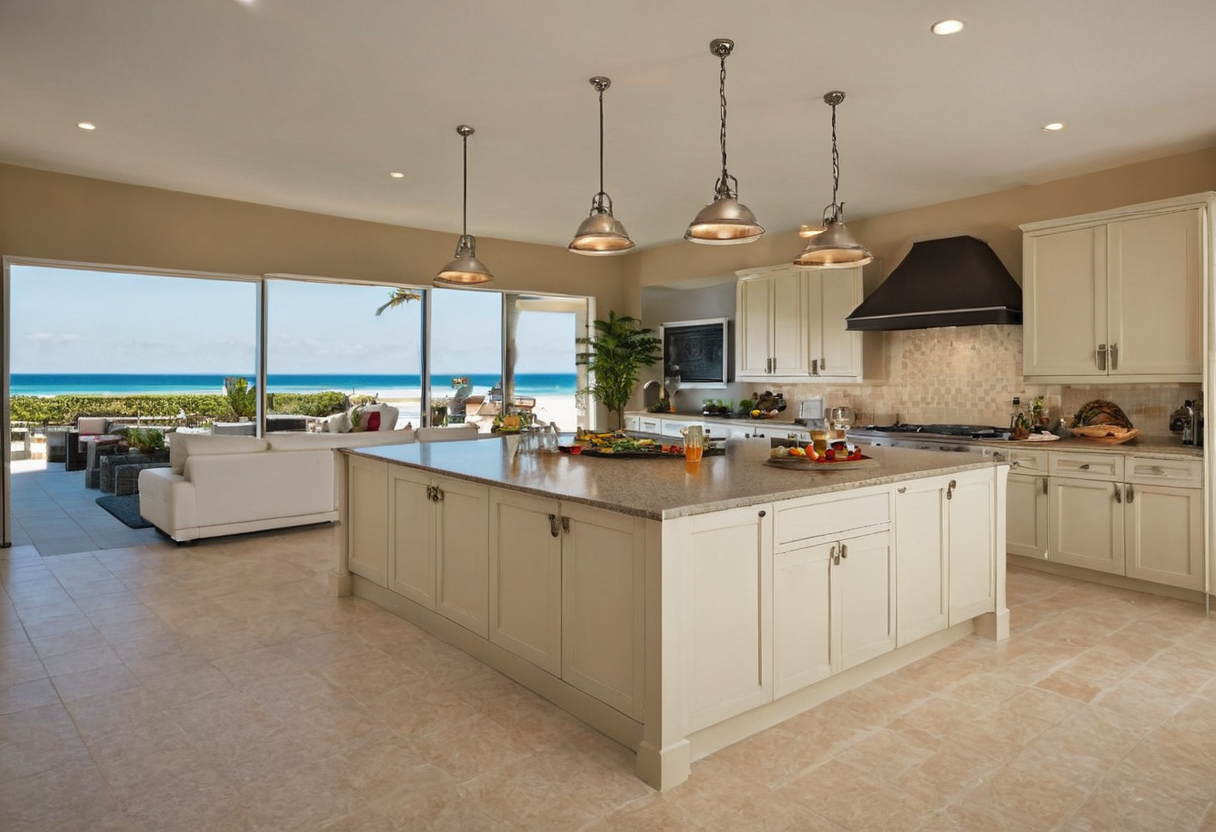
Should pendant lights be centered to the kitchen island or to work zones shown with hotel-arrival and visitor-movement context.
Coordinate pendant rough-in before drywall, ceiling finish, or final electrical inspection
Electrical box locations should be reviewed before drywall repair, plaster work, wood ceiling installation, or final inspection. Ceiling joists and blocking may affect exact placement, so the electrician needs the approved island drawing and fixture canopy dimensions before setting boxes.
What specifications should be approved before ordering pendant light fixtures for a kitchen island?
Pendant light fixtures for a kitchen island should be ordered only after the team confirms diameter, height, weight, canopy size, suspension length, lamping, dimming, finish, lead time, installation method, and service parts. Fixed ceiling boxes, custom fixtures, imported fixtures, and integrated LED designs leave little room for late corrections.
Request the pendant specification sheet before the electrician sets final box locations
The manufacturer specification sheet should show fixture diameter, overall height, canopy dimensions, mounting hardware, weight, voltage, and suspension system. A beautiful pendant can still fail if the canopy cannot cover the existing ceiling opening, the rod cannot be field-cut cleanly, or the fixture needs support beyond a standard box.
Check replacement lamps, drivers, and dimmers before choosing integrated LED kitchen pendant lighting
Integrated LED kitchen pendant lighting requires a maintenance review before purchase. The buyer should confirm whether the LED module is replaceable, where the driver sits inside the fixture, and how the driver is accessed for service. The manufacturer specification sheet must list compatible dimmers to prevent flickering or dropout at low levels. The warranty documentation should explicitly state whether coverage includes the LED module, the driver, and the exterior finish. Selecting the right dimmer protocol is covered in the guide on kitchen pendant lighting controls.
The most common kitchen island pendant mistakes are scale, glare, weak task light, and late coordination
Most kitchen island pendant problems come from choosing fixtures too early, too large, too low, too bright, or too decorative for the actual work surface. These mistakes are preventable when pendant size, light output, electrical locations, and sightlines are reviewed before purchase and rough-in.
Oversized shades can make a narrow kitchen island feel crowded even when spacing math looks correct
A narrow island may be only about 24 to 30 inches deep, while many standard working islands are closer to 36 to 42 inches deep. A 16-inch shade can look disciplined over a deep island and bulky over a shallow one. Weak task light is the quieter failure: decorative kitchen island pendant lamps may photograph well but leave chopping, homework, and plating dependent on distant recessed lights.
The most common kitchen island pendant mistakes are scale, glare, weak task light, and late coordination shown with hotel-arrival and visitor-movement context.
Pendant lights over kitchen islands are not going out of style, but poorly specified pendants date quickly
Kitchen pendant lighting endures because an island needs visual hierarchy and usable light. What dates quickly is the fixture that ignores proportion, shows harsh lamp glare, uses a fragile finish, or cannot accept a replacement lamp, driver, or dimmer later.
FAQ
What is the basic rule for pendant lighting over a kitchen island?
Size and locate pendants from the finished island, not from a product photo. Confirm island length, depth, ceiling height, counter height, shade diameter, and sightlines before rough-in.
What height should pendant lights be over a kitchen island?
A common starting point is 30 to 36 inches from the finished countertop to the bottom of the shade. Adjust for ceiling height, fixture output, shade depth, and views.
What is the best spacing for kitchen island pendants?
Many layouts keep pendant centers about 12 to 18 inches in from the island ends and about 24 to 36 inches apart, depending on shade diameter.
Should pendant lights be centered to the kitchen island?
Usually, yes. Center pendants on the finished island footprint, including panels, overhangs, and trim, then adjust for sinks, cooktops, seating, and appliance requirements.
How many pendant lights should go over an 8 ft or 9 ft kitchen island?
An 8 ft island often works with two larger pendants or three smaller pendants. A 9 ft island can often carry three pendants or one long linear fixture if shade size, beam spread, and electrical locations fit.