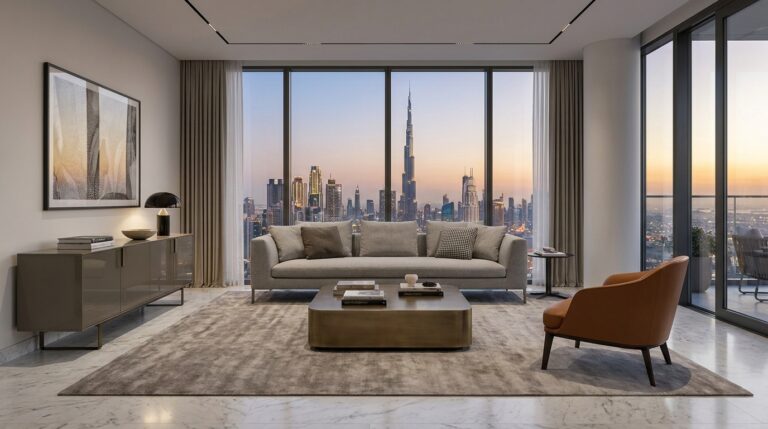
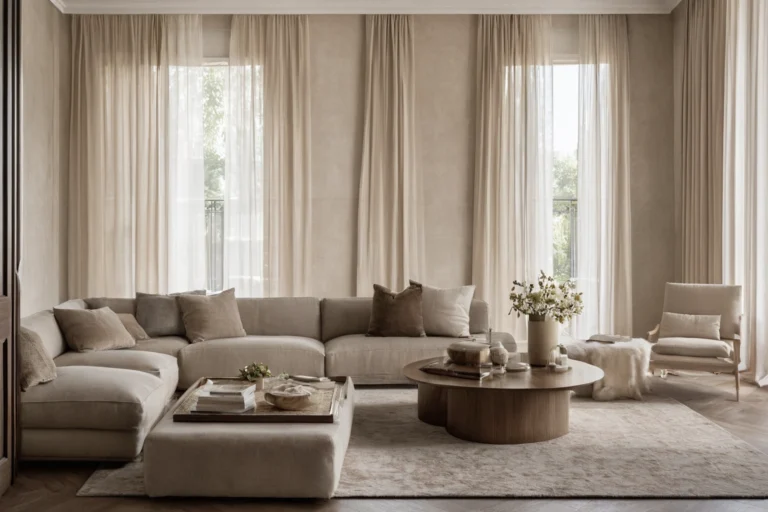
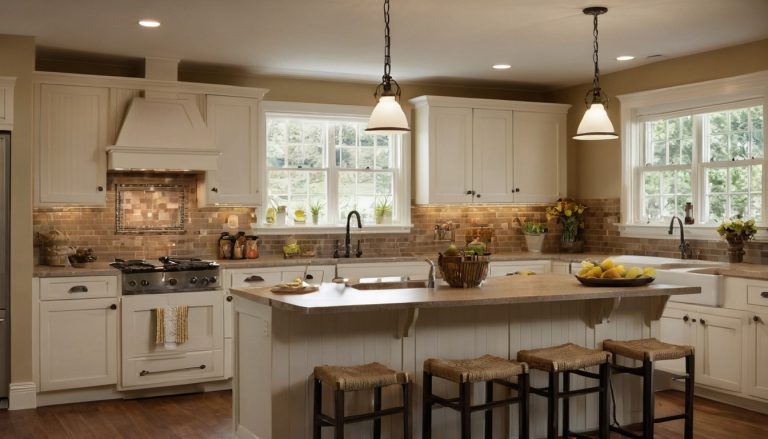
View White Cabinet Samples Under the Specified LEDs Before Approving the Finish
A paint code and showroom chip are not enough to approve white kitchen cabinets. Before the deposit releases production, put a full-size finished door under the specified kitchen lights, beside the actual surrounding materials, and decide which physical sample will control the job.
White kitchen cabinets should be approved under the specified kitchen lighting, not showroom lighting
White finishes can shift toward cream, blue, green, pink, or gray as the LED source, daylight, sheen, and nearby materials change. Approve the controlling door under the specified luminaires, mounting positions, output levels, and control settings.
Why does a white cabinet sample change between the showroom and the kitchen?
A cabinet finish is seen through the light falling on it. Spectral output, intensity, beam direction, and reflected color from walls or countertops can make the same door read differently. Record the kitchen orientation, elevations receiving daylight, inspection time, daylight condition, and dimming level.
The lighting schedule should identify the manufacturer, model number, optic, output, and nominal correlated color temperature of every recessed, pendant, undercabinet, and decorative luminaire reaching the door face. Compare the full-size door in the showroom and kitchen mockup by eye. Photographs may document the setup, but camera exposure and white balance can conceal a shift.
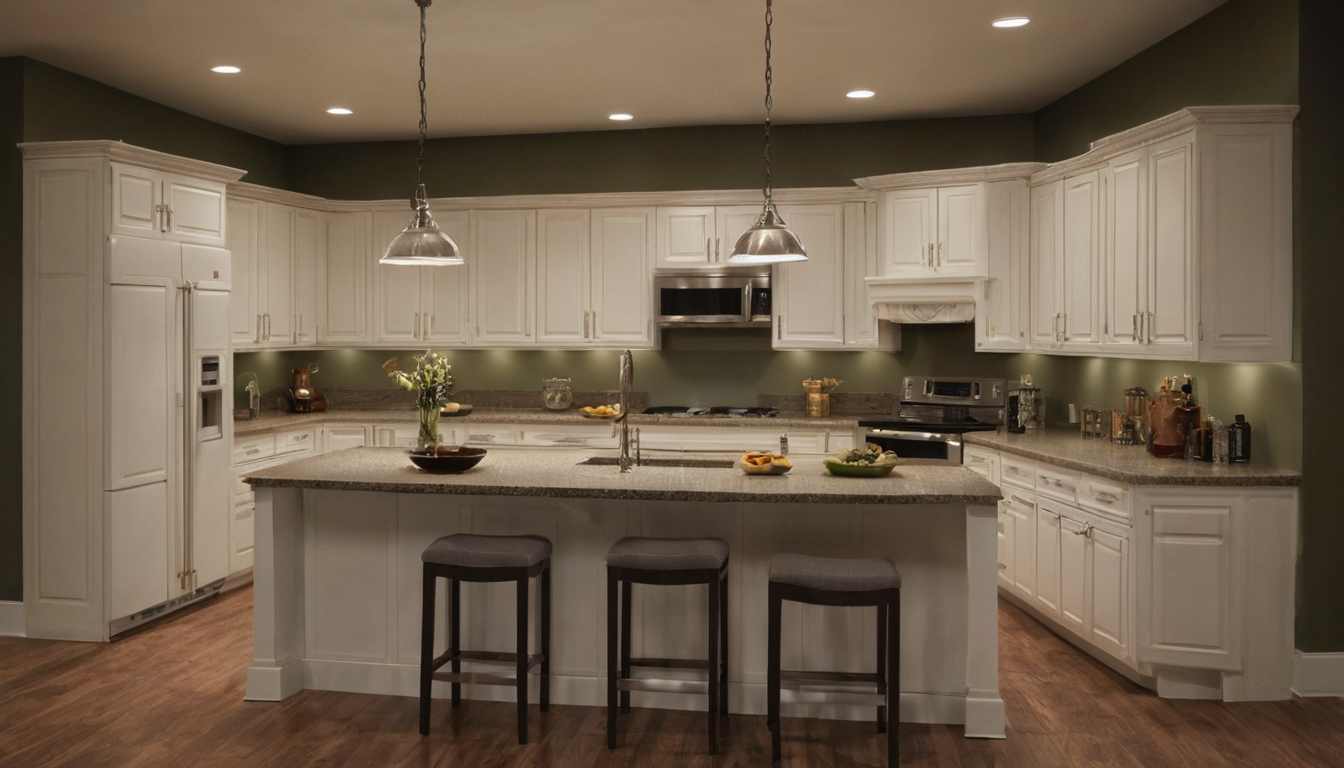
White kitchen cabinets should be approved under the specified kitchen lighting, not showroom lighting shown as an editorial planning reference.
A paint name or color code does not replace a production-representative door sample
A paint reference identifies color intent, not the completed coating. The approval door should carry the production substrate, primer, finish formula, topcoat, application method, cure, edge coverage, texture, and specified sheen.
The written release should identify the cabinet shop, controlling physical sample, approval stage, and whether approval covers color alone or also sheen, texture, edges, and allowable variation. It should state which reference controls if the formula, printed chip, and finished door disagree. Hold production until the finish sample and lighting setup are verified. The next check is the LED record.
Which LED specifications reveal how white kitchen cabinets may render?
Correlated color temperature alone cannot describe how a specified LED will render white kitchen cabinets. Review CCT with Duv or chromaticity, spectral power distribution, IES TM-30 results, output, optics, and dimming behavior. Every record must apply to the exact luminaire configuration, not merely a related product family.
Ask the lighting supplier for a submittal that identifies:
- Exact luminaire or tape-light model, nominal CCT, CCT tolerance, output, and optic.
- Duv or chromaticity coordinates, plus the stated color-consistency tolerance and test basis.
- Spectral power distribution for the specified LED package, CCT, and output setting.
- The complete IES TM-30 report, including fidelity index, gamut index, color vector graphic, and available hue-bin data.
- An ANSI/IES LM-79 report, or equivalent accredited laboratory report, for the specified configuration.
- Driver model, dimming protocol, compatible controls, minimum dimming level, and documented chromaticity behavior while dimming.
CCT labels do not predict whether a white cabinet will look green or pink
A 3000K label gives a broad warm-to-cool description. It does not show whether the source sits slightly above or below the reference locus, which can contribute to a greenish or pinkish cast. Duv or chromaticity coordinates provide that missing direction.
Two luminaires carrying the same nominal CCT can occupy different chromaticity positions or use different LED spectra. Their production tolerances may also differ. Put each applicable report beside the exact model number, driver, output option, and binning documentation before comparing the sources on a cabinet door.
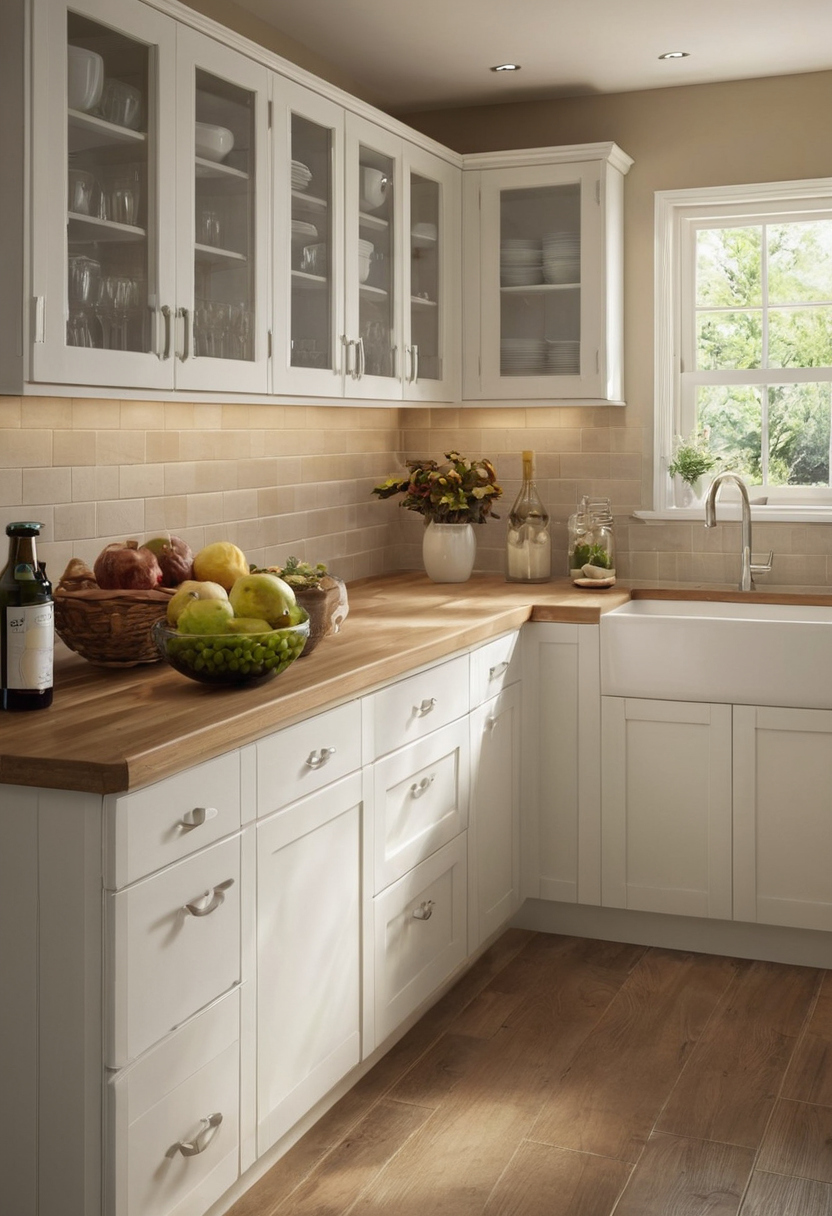
Which LED specifications reveal how white kitchen cabinets may render shown as an editorial planning reference.
The door still gets the final vote. Manufacturer data can expose likely trouble, but observation under both sources shows whether the particular primer, white coating, and topcoat produce a visible mismatch.
IES TM-30 and spectral power distribution provide more useful color-rendering evidence than CRI alone
CRI compresses color rendition into a familiar summary, but that summary does not describe where hue and saturation shifts occur. A complete IES TM-30 report adds fidelity, gamut, and hue-specific information. Its color vector graphic can help a lighting professional find spectral differences that a single CRI number hides.
Spectral power distribution shows how the LED distributes energy across visible wavelengths. A painted white surface does not reflect every wavelength equally, so two sources with similar CCT and CRI can produce different cabinet appearances. No TM-30 value or spectral graph guarantees the result without testing the coating.
If laboratory comparison is planned, collect spectral reflectance data from the actual finish specimen. ASTM E1164-23 provides practices for obtaining spectrometric data used in object-color evaluation when a spectrophotometer or spectrocolorimeter measures a physical specimen.
Dimming and tunable-white controls must be tested at the settings the kitchen will use
A dimmer can change more than brightness when the driver, LED package, or programmed control curve changes spectral output. Tunable-white systems mix channels, while dim-to-warm systems intentionally shift color as output falls. Review choosing between dim-to-warm and tunable-white controls before approving scenes.
Record the daytime, cooking, and evening settings, including CCT, output, driver, dimmer, and minimum level. Test those settings on a full-size door in a mockup that reproduces the installed kitchen rather than merely lighting a loose sample on the bench.
How should a full-size cabinet door and lighting mockup be built?
A useful mockup places a full-size, production-representative cabinet door in its planned orientation beneath the specified task and ambient lights. Use the actual drivers, dimmers, mounting distances, control scenes, nearby materials, and daylight exposure before releasing the finish.
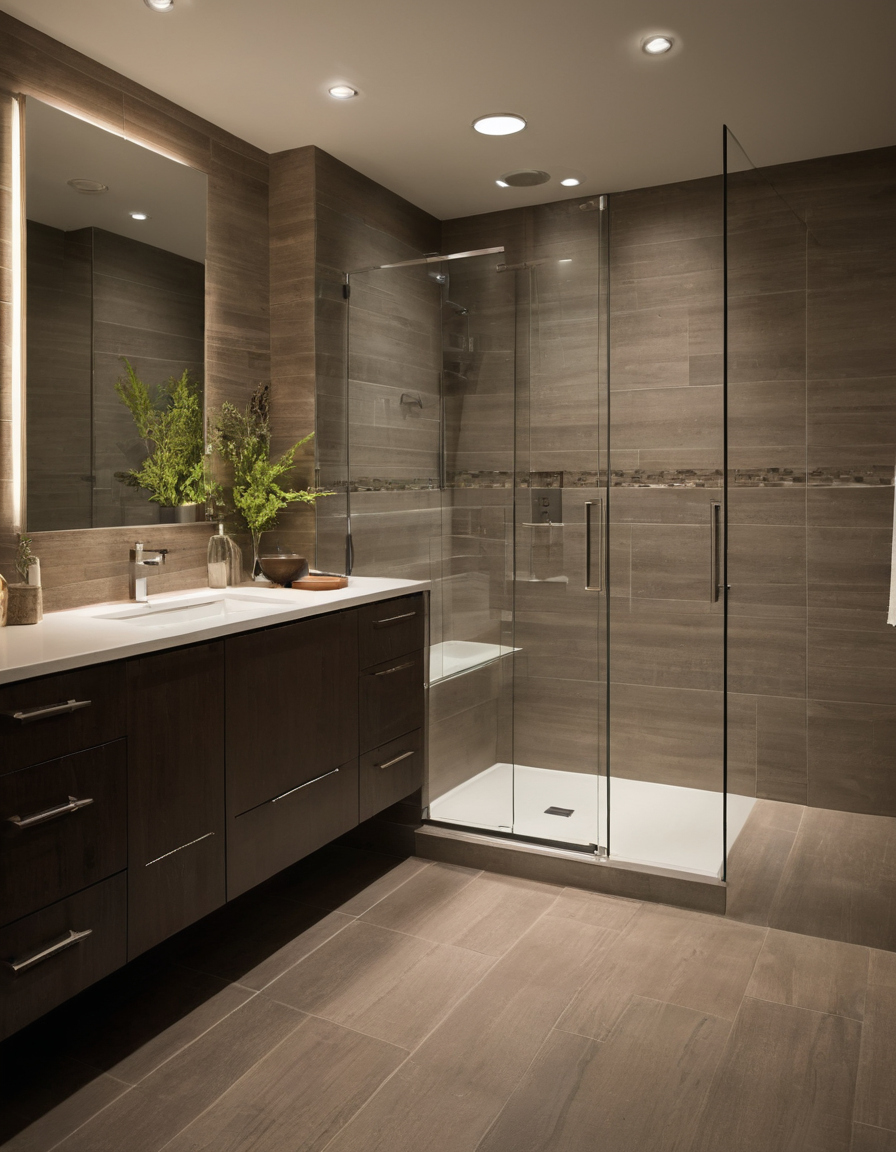
How should a full-size cabinet door and lighting mockup be built shown with finish, fixture, and clearance relationships visible.
- Reject a sample made on a different substrate or with a different door profile.
- Reject a lighting test that substitutes a portable lamp for the specified luminaires.
- Reject photographs as the sole basis for color approval.
- Retain the labeled door as the control sample for production and replacement work.
The cabinet sample should match the production substrate, profile, coating system, and sheen
The sample door should have the scheduled panel construction, rail-and-stile profile, edge treatment, and production substrate. A small flat chip cannot show shadow lines around a raised panel, paint buildup at inside corners, edge coverage, or the way sheen changes across routed details.
The finishing shop should confirm the primer, paint, topcoat, application method, cure schedule, and sheen in writing. Ask whether the sample was hand-sprayed differently from the production line. If preparation differs, the shop should explain why the sample still represents the doors that will ship.
The shop label should identify the finisher, color formula, batch, substrate, sheen, completion date, and sample status. Follow the cabinet manufacturer’s approval procedure. Protect the signed door from sunlight, moisture, abrasion, and cleaning chemicals so the face and edges remain useful for later comparison.
The mockup should reproduce light direction and source distance
The mockup should follow the reflected ceiling plan and cabinet elevations. Record the mounting height, setback, aiming angle, diffuser or optic, and distance from each undercabinet, recessed, pendant, and decorative source to the door face. Light raking across a painted profile can expose texture and gloss that disappear under broad frontal showroom lighting.
The test should use the specified luminaire, driver, dimmer, control interface, and programmed scenes. Check full output, normal evening settings, and the lowest scene the household expects to use. Manufacturer photometric files or distribution data help reproduce the intended direction. The pendant height, spacing, glare, and task-light decisions also affect how light reaches nearby cabinet faces.
Inspect the door during relevant daylight periods and again after dark. View it from normal standing positions, seated island or table positions, and adjacent-room sightlines. Mark those viewpoints so each person judges the same setup.
The cabinet door should be inspected by eye before photographs are used as records
Direct visual inspection comes first. Camera white balance, exposure, image processing, and an uncalibrated display can make the same door look warmer, cooler, greener, or grayer than it appears in the room.
Record photographs should list the camera model, exposure, white-balance method, editing status, viewpoint, time, and daylight condition. The approval record should state that photographs document the setup but do not replace the retained physical door.
Before signing, bring the countertop, backsplash, flooring, and wall-paint samples into the same light. Cabinet white cannot be judged honestly by itself.
Countertops, backsplashes, flooring, and wall paint must be present when judging white kitchen cabinets
White kitchen cabinets should be judged beside the materials that will surround them because reflected light and simultaneous contrast change the visual result. Place approved countertop, backsplash, flooring, wall-paint, hardware, sink, and appliance samples in their intended relationships. Remove protective films and temporary coatings first.
The mockup record should identify the wall-paint color, sheen, specified primer, and scheduled finish coats. Record the countertop and backsplash finish, pattern direction, and slab, batch, or lot identity where applicable. A polished surface and a honed surface can throw very different highlights onto the same door face.
Strong daylight needs its own inspection period. Colored glazing, exterior awnings, green landscaping, brick walls, and neighboring buildings can cast color back through the glass. Check cabinet junctions in daylight, after dark, and under the lighting scenes intended for daily use.
Adjacent whites should be compared at their installed angles rather than stacked flat
Set the cabinet door vertically. Set the countertop horizontally. Place the backsplash and wall-paint boards upright behind them. A plywood sample stand can reproduce those planes, but it must hold each surface where the specified recessed, pendant, and undercabinet light will strike it.
Document observations, or illuminance readings when the project team takes them, on each plane. Mark which whites are intended to match and which are deliberately different. An intentional warm wall beside a cleaner cabinet white is acceptable. An unexplained mismatch is not.
Sheen can make the same cabinet color appear lighter, darker, or more uneven
Cabinet sheen changes the size and brightness of highlights without changing the paint formula. Inspect the door under direct, diffuse, and grazing illumination. Grazing light helps expose uneven spray patterns, edge buildup, texture differences, and profile shadows that disappear under broad ambient light.
The approval record should state the manufacturer’s sheen designation and acceptable range. When numerical gloss measurements control acceptance, identify the instrument and test geometry. ASTM D523 measures specular gloss on suitable nonmetallic specimens using 20-degree, 60-degree, or 85-degree geometry. An unexplained gloss number is therefore incomplete.
Natural-stone samples must remain representative. The Natural Stone Institute warns that abrasive scouring powders and creams can scratch stone, changing the surface seen beside the cabinet.
Once the assembled mockup exposes color relationships and sheen, the approval needs measurable tolerances and clear visual acceptance conditions.
Cabinet finish approval should define measurable tolerances and visual acceptance conditions
A signed approval should identify the retained door, coating system, sheen, specified lights, control settings, surrounding samples, and viewing conditions before production starts.
- Obtain the cabinet manufacturer’s written limits for color and sheen variation, plus its touch-up, replacement, and remake policies.
- State whether visual approval, instrumental measurement, or both will control acceptance if the methods disagree.
- Record the approved door’s identification number, completion date, signatures, and protected storage location.
- Apply the same comparison procedure to doors, fillers, moldings, finished ends, replacement parts, and field repairs.
Delta E values are meaningful only when the measurement method and acceptance limit are stated
A Delta E number by itself does not tell the shop what passes. ASTM D2244-23 provides procedures for calculating color differences and tolerances from instrumentally measured color coordinates. The parties must still identify the selected color-difference equation and compatible measurement conditions. CIELAB, CMC, CIE94, and CIEDE2000 are not interchangeable labels.
The project specification should name the equation, illuminant, observer setting, instrument, calibration status, aperture, measurement geometry, and reference specimen. The record should show how many readings are required and where they are taken. A center-panel reading cannot describe a routed edge that receives a different coating build.
The acceptance threshold must come from the cabinet manufacturer or qualified project specifier. A contractor should not borrow a universal Delta E limit from another paint system, substrate, instrument, or job.
Sheen needs the same discipline. If gloss is measured under ASTM D523, the approval should name the measurement geometry and the cabinet manufacturer’s acceptable range. If controlled visual appraisal forms part of the contract, record the viewing setup and applicable procedure.
Replacement doors and field touch-ups should be checked under the same approved lighting
A replacement door can carry the correct paint code and still differ because its coating batch, spray application, film build, or cure history changed. The manufacturer’s batch-matching policy should say whether a single component can be supplied or whether neighboring fronts may need replacement for a reasonable visual match.
Field touch-ups should use the specified repair material, application tool, and cure period before inspection. Compare the repair with the retained door under every approved kitchen scene, including the documented daylight conditions. The signed approval should state who decides whether lighting adjustment, refinishing, or replacement is required.
With the tolerances settled, the homeowner can make a controlled production release rather than relying on a verbal promise.
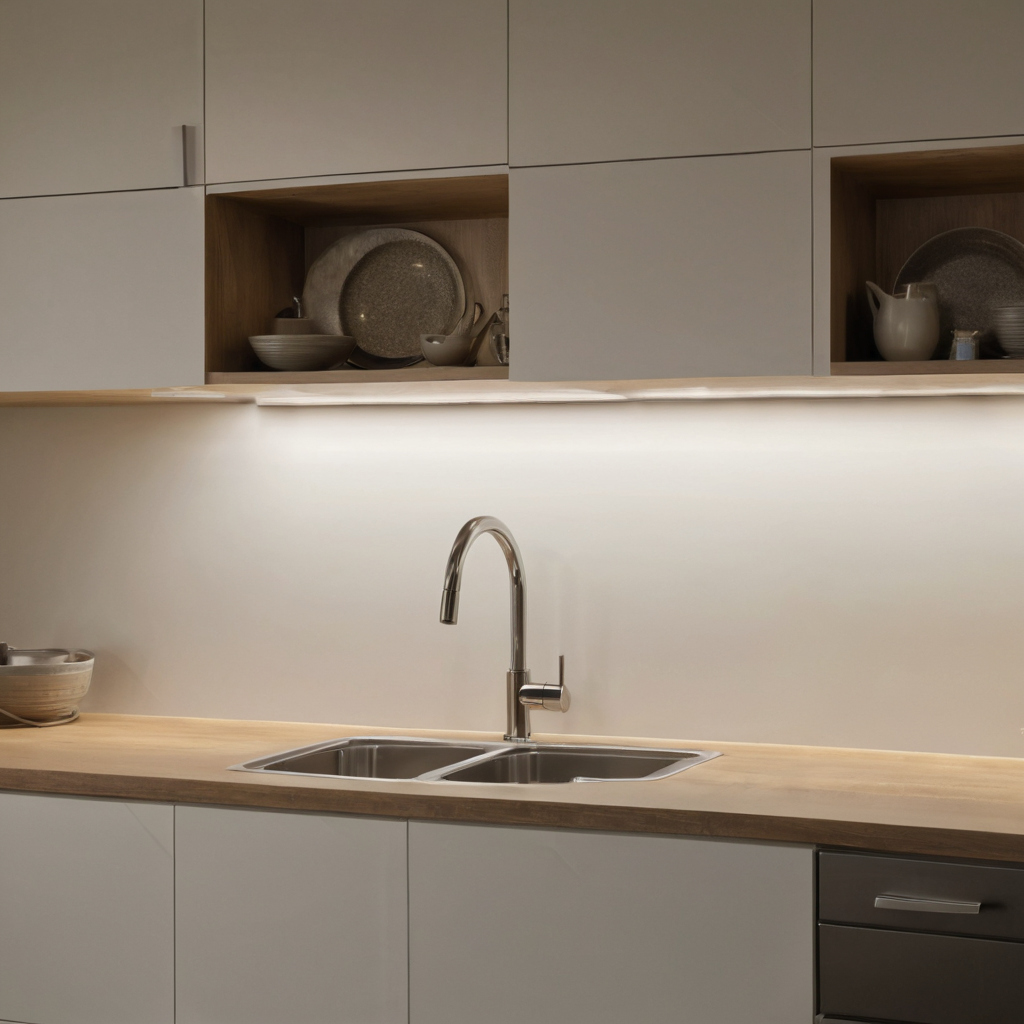
Cabinet finish approval should define measurable tolerances and visual acceptance conditions shown with practical context cues.
What should the homeowner ask before authorizing white kitchen cabinet production?
The homeowner should require the cabinet shop, lighting supplier, designer, and electrician to identify the controlling door sample and exact lighting setup. Production should remain on hold until substitutions, control settings, surrounding finishes, acceptance terms, and responsibility for mismatches are recorded.
Use a written release checklist before the cabinet shop orders paint or starts production
- Identify the controlling sample. Record the full-size door ID, substrate, finish system, color, sheen, batch or completion date, and approved adjacent samples.
- Lock the lighting schedule. List exact luminaire models, optics, drivers, controls, programmed scenes, and approved substitutions.
- Record the mockup. Attach photographs showing fixture positions, source distances, door orientation, labels, daylight condition, and inspection date.
- Set the project sequence. Show dates for sample production, mockup review, finish release, cabinet production, lighting procurement, and installation.
- Assign mismatch costs. State who pays when an unapproved luminaire, driver, control setting, or cabinet finish is supplied.
- Plan the installed-room review. Define the correction process if changed fixture positions or programming alter the approved appearance.
The final record should name the parties allowed to release the finish or approve a lighting substitution. No verbal substitution should override it. Give the record to every responsible party, then use the signed physical sample and lighting schedule as the production gate.
Frequently asked questions
Why do white kitchen cabinets look yellow at night but gray or blue during the day?
Daylight and electric light have different spectral distributions, directions, and intensities. Warm evening LEDs can emphasize cream tones, while cool daylight and reflected sky light can make the same finish appear grayer or bluer.
Is 3000K or 4000K better for viewing white kitchen cabinets?
Neither CCT is automatically better. Judge the specified source beside the cabinet door and surrounding finishes. Review Duv or chromaticity, spectral data, dimming behavior, and the intended mood as well as CCT.
Can two LED products with the same CCT make the same white cabinet look different?
Yes. Equal nominal CCT labels can hide different chromaticity positions, spectra, optics, output levels, and production tolerances. Test each exact luminaire configuration on the controlling door.
Is a small painted color chip sufficient for approving a white cabinet finish?
No. A chip cannot represent the production substrate, routed profile, edge coverage, coating build, texture, or changing highlights across the specified sheen. Use a full-size production-representative door.
What should be written on the approval form before white kitchen cabinets enter production?
Identify the controlling door, coating system, sheen, surrounding samples, exact luminaires, drivers, controls, approved scenes, inspection conditions, acceptance tolerances, responsible parties, signatures, and production-release date.